Behind the Build: the Lariana chair by Giuseppe Terragni
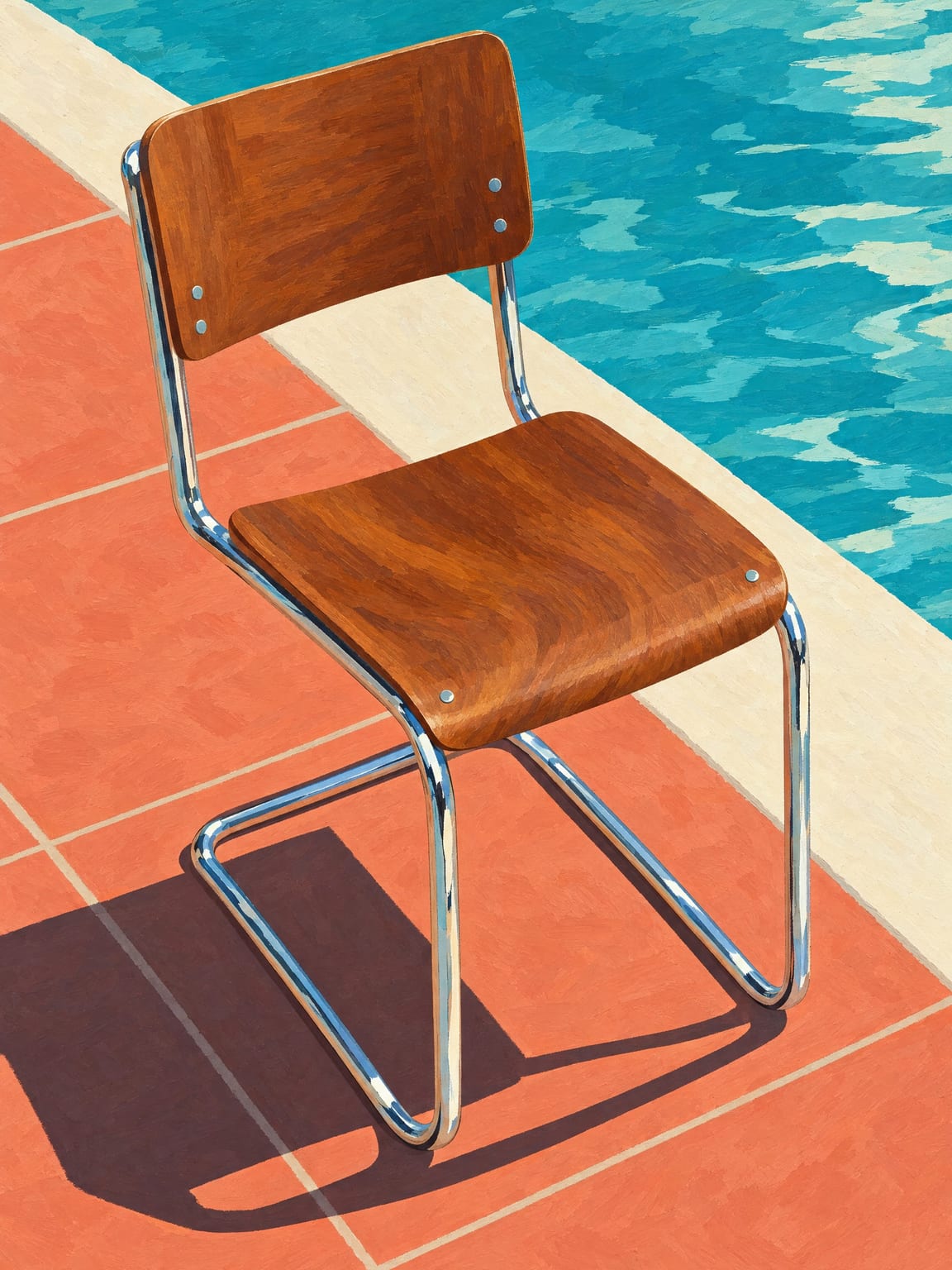 Made with AI
The Lariana chair looks like four lines of steel tube and two flat boards. Rebuilding it from photos shows how much design sits in those few parts, and why the published sizes of a classic chair cannot be taken on trust.
A chair for one building
Giuseppe Terragni (1904 to 1943) designed the Lariana in 1935 and 1936 for the Casa del Fascio in Como, the building he finished in those same years as the regional office of Italy's Fascist party. According to the Vitra Design Museum record, the chair and a matching armchair were made for that building by the manufacturer Columbus, and produced in 1936.
The furniture was part of the building's argument, not an afterthought. Historian David Rifkind's article in arq, Furnishing the Fascist interior, studies how Terragni and the painter Mario Radice used architecture, furniture and decoration together to carry the regime's political message. Any account of the chair has to start there: it is a fine piece of design made for a building with a political purpose.
What the design does
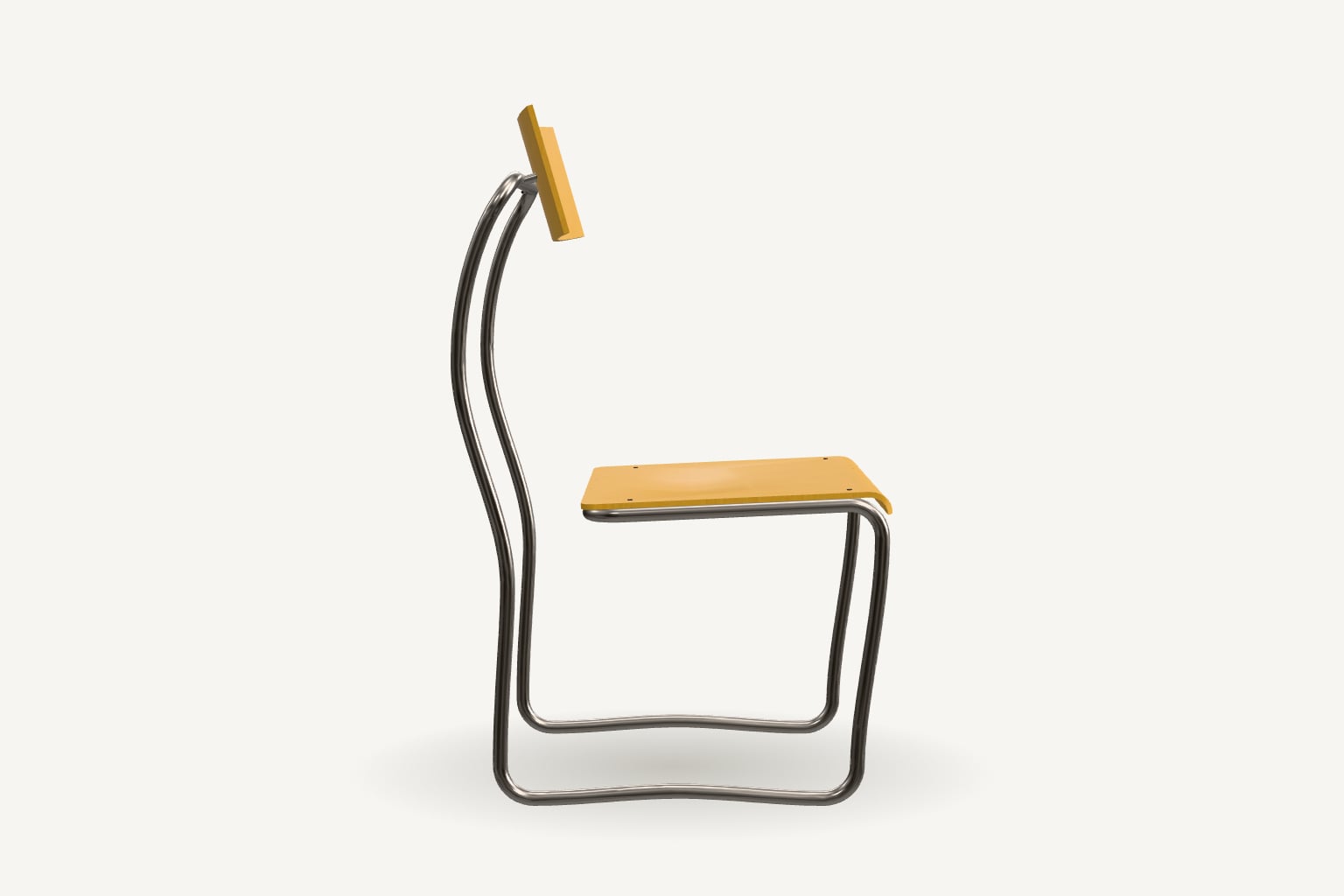
Terragni's early drawings show front legs with a slight bend and a shaped seat. The chair that was built is stricter: straight tube, flat seat, flat back. The important move is structural. The back is built separately from the seat, which floats free. The Vitra record calls this a double suspension, and notes a tube diameter of 20 mm.
Zanotta, which has made Terragni designs, describes the same idea behind both the Lariana and the Sant'Elia armchair: seat and back are kept apart, and comfort comes from letting the metal tube bend. The Vitra record adds that Terragni paid more attention to ergonomics than other designers of his time, which sets the chair apart from the strict geometry of Marcel Breuer's tubular steel designs. It reads as a diagram, but it was designed around a sitting body.
 Made with AI
Two museums, two heights
Here is the detail a modeler notices first. Two public collections that hold a Lariana give different sizes:
- Vitra Design Museum: 92.7 x 42.5 x 57.5 cm, chrome-plated tubular steel with lacquered plywood and solid wood.
- Staatliche Kunstsammlungen Dresden: 77.5 x 43 x 56.5 cm, seat height 43 cm, chromed steel with black lacquered wood, from a later production run that began in 1960.
Width and depth agree to within 1 cm. Height differs by about 15 cm. The likely reasons are ordinary ones: the 1936 Columbus chairs and later reissues are not the same object, and museums do not always measure to the same point. Whatever the cause, a designer who copies the first number found online could end up with a back that is far too tall or too short.
What modeling it from photos involves
A chair this simple is a good test, because there is nowhere to hide an error.
- Find the parts. The Lariana is not one shape. It is a front frame, a rear frame, a seat board, a back board and the fixings between them. Each needs to be its own object, so you can change the seat without touching the tube. This is the step most photo-to-3D tools skip: they return one wrapped mesh.
- Follow the tube. A steel tube is a profile swept along a path. The path needs clean bends with a constant radius, and the 20 mm diameter has to stay constant along its length. A tube that thickens at the bends shows at once in a render or a drawing.
- Keep the gap. The double suspension only exists if the seat and back stay separate. A model that fuses them looks right in a thumbnail and is wrong as a chair.
- Set the size. With two published heights, pick a source and say which one you used. If you own the chair, measure it.
- Check it as a solid. Each board should be a closed solid and each tube a clean sweep, so the file can be cut, filleted or sent to fabrication.
The Montea sample
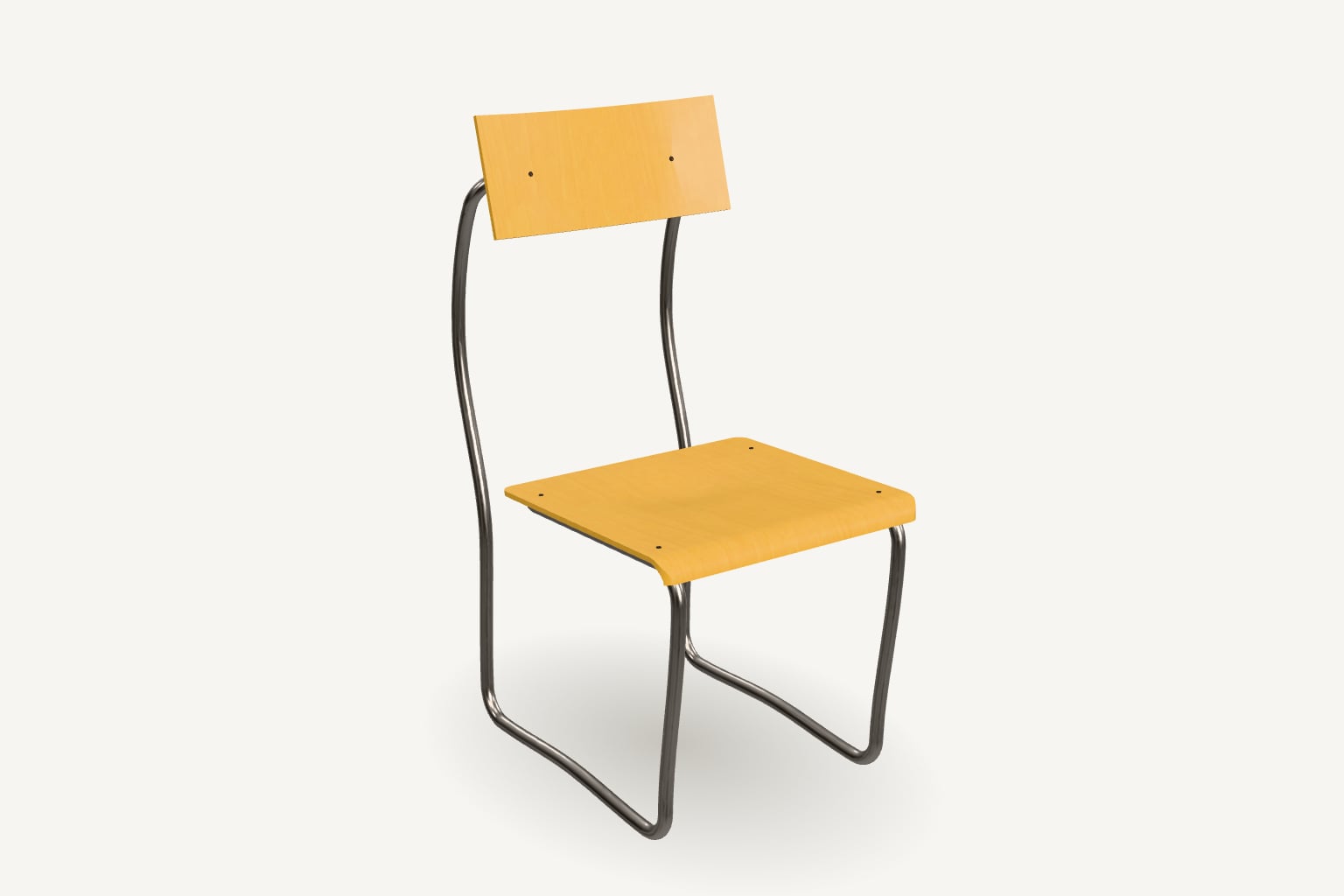
The Lariana is one of the detailed samples in Montea's Library, shown next to the photo it came from. Montea's models are built by AI and checked against your photo. This build took 34 minutes and has 17 parts on 3 layers, which you can take apart in the 3D viewer.
 Made with AI
Montea turns a photo of furniture, an object or a room into an editable 3D model for Rhino and SketchUp, with polysurfaces and SubD on named layers and with accurate dimensions, plus STEP, DWG, GLB, OBJ, STL and USDZ. Sizes come from the sizes you give, or from the maker's published dimensions when we find them; otherwise they're estimated from the photo. As the two museum records show, published dimensions can disagree, so check a size before you make anything. A Medium model takes about 10 to 30 minutes, and a model can be rebuilt once for free if something is wrong.
If you work in Rhino, the photo to Rhino model page explains how a build arrives in your file, and the FAQ answers the most common questions.
Why it still matters
The Lariana packs a full idea into a small number of parts: separate the seat from the back, and let the material do the work. Modeling it well means respecting that idea. Keep the parts apart, keep the tube true, and know where every size came from.
Have a photo of the piece you need? Model a Photo